GitHub Copilot, Cursor, Claude Code, Windsurf and the rest - what you need to know about cost, security and compliance before your organisation commits.
Legacy systems, modern expectations - stabilisation, modernisation and ongoing support

Python → Java/Angular
AngularJS migration
Java 8 containerisation
.png)


.png)


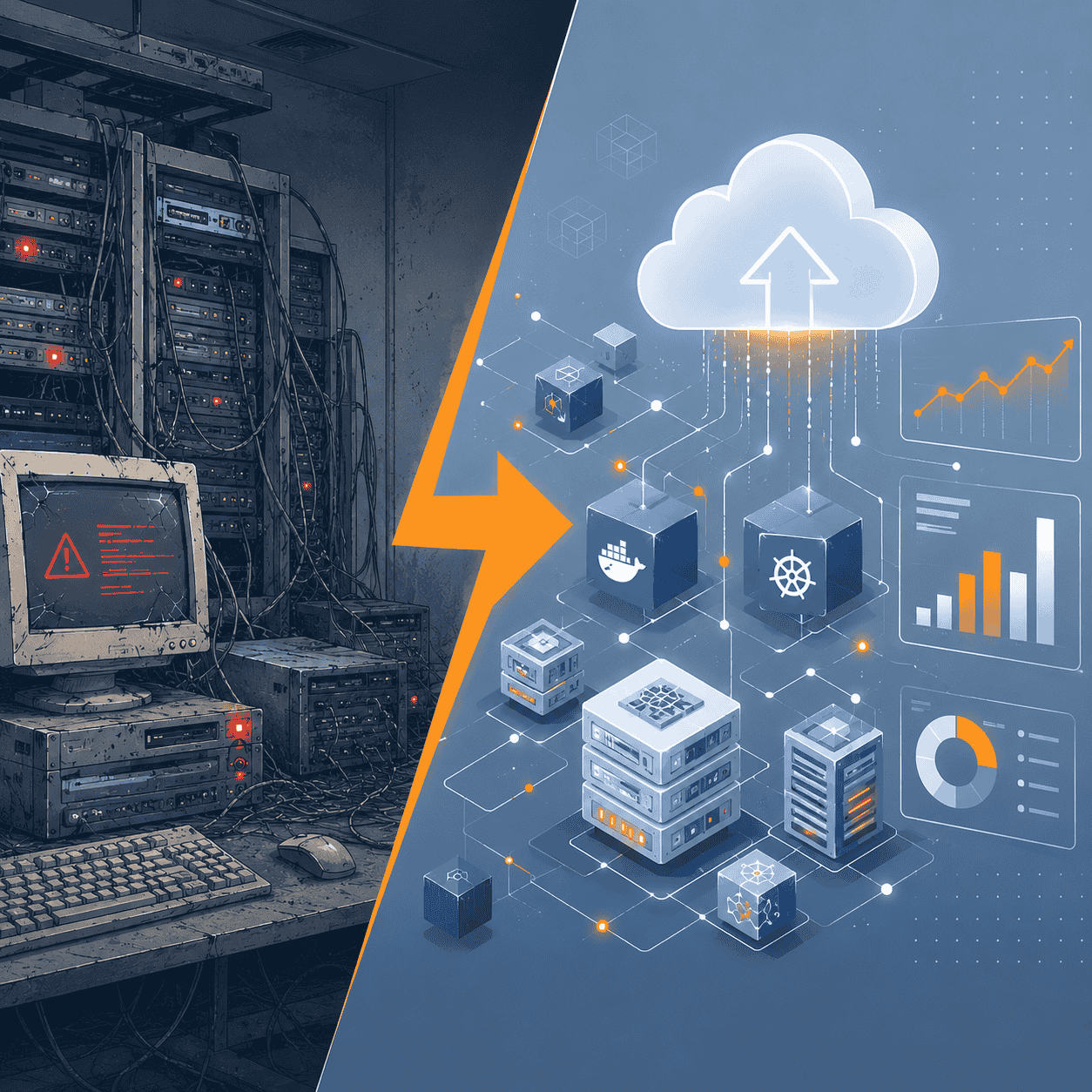
Every organisation has a system that everyone knows is a problem - yet nobody dares to touch it. The original developers left long ago. Documentation is patchy or non-existent. Change one thing and at least two others break. Sound familiar?
The legacy system still does its job, but maintenance costs rise every year. Every small change takes a disproportionate amount of time and money. Technical debt accrues interest - and it keeps getting more expensive.
New digital solutions cannot be connected to the old system. There is no API, no documentation, and modern tools cannot read outdated formats. Digitalisation hits a wall at the legacy system.
Regulatory expectations in financial services keep tightening. A legacy system that has not had a security update in years is increasingly hard to defend in an audit - and an ever greater risk.
Every organisation has a system that everyone knows is a problem - yet nobody dares to touch it. The original developers left long ago. Documentation is patchy or non-existent. Change one thing and at least two others break. Sound familiar?
The legacy system still does its job, but maintenance costs rise every year. Every small change takes a disproportionate amount of time and money. Technical debt accrues interest - and it keeps getting more expensive.
New digital solutions cannot be connected to the old system. There is no API, no documentation, and modern tools cannot read outdated formats. Digitalisation hits a wall at the legacy system.
Regulatory expectations in financial services keep tightening. A legacy system that has not had a security update in years is increasingly hard to defend in an audit - and an ever greater risk.
There is no single right recipe. Sometimes stabilisation and documentation are enough, sometimes a gradual replacement is needed, and sometimes a full replacement carries the lowest risk. We assess first, then recommend - and we see the chosen path through to go-live and beyond.
If it still works
If the system still works but is fragile, we stabilise it, document it and run it under an ongoing support arrangement - as a managed service or on an hourly basis, whichever suits you. For example, we containerised a Java 8 insurance application and continue to support it: it still runs today, securely and fully documented.
If it needs to evolve
Not a big bang, but a strangler fig approach: we gradually replace critical functions with modern components while the system keeps running. In financial services this is often the only safe route - you cannot switch off a core system for a week.
If it can't be sustained
Where an incremental approach is not enough, we plan and execute a full system migration - from data migration and integration architecture to testing and cutover.
Before deciding
Before we touch anything, we map the system: architecture, code quality, dependencies, data model and security risks. The result is a decision paper - stabilise, modernise incrementally or replace - with costs and risks attached.
If it still works
If the system still works but is fragile, we stabilise it, document it and run it under an ongoing support arrangement - as a managed service or on an hourly basis, whichever suits you. For example, we containerised a Java 8 insurance application and continue to support it: it still runs today, securely and fully documented.
Not a big bang, but a strangler fig approach: we gradually replace critical functions with modern components while the system keeps running. In financial services this is often the only safe route - you cannot switch off a core system for a week.
If it needs to evolve
If it can't be sustained
Where an incremental approach is not enough, we plan and execute a full system migration - from data migration and integration architecture to testing and cutover.
Before we touch anything, we map the system: architecture, code quality, dependencies, data model and security risks. The result is a decision paper - stabilise, modernise incrementally or replace - with costs and risks attached.
Before deciding
Our team has backgrounds in insurance, banking and leasing. We know what an outage of a mission-critical system means for an insurer, and we know what a central bank audit will ask. You don't need to explain the context.
Most IT firms deliver the project and leave. We also work under ongoing support models, as a managed service or on an hourly basis. If something breaks overnight, we are the ones who respond.
On legacy projects it is especially critical that the expert who has learned the system doesn't leave six months later. Turnover at FrontX is low, so system knowledge stays with the team.
We are not tied to any single platform. Java, .NET, Python, containerisation, cloud migration - the business need and the risk profile decide the right direction.
Our team has backgrounds in insurance, banking and leasing. We know what an outage of a mission-critical system means for an insurer, and we know what a central bank audit will ask. You don't need to explain the context.
Most IT firms deliver the project and leave. We also work under ongoing support models, as a managed service or on an hourly basis. If something breaks overnight, we are the ones who respond.
On legacy projects it is especially critical that the expert who has learned the system doesn't leave six months later. Turnover at FrontX is low, so system knowledge stays with the team.
We are not tied to any single platform. Java, .NET, Python, containerisation, cloud migration - the business need and the risk profile decide the right direction.
We rewrote a Python-based system supporting vehicle condition assessment and yard management on Java Spring Boot and Angular. We redesigned the entire database structure and developed and tested the data migration procedures. As the system serves around 25 companies with a large number of live users, cutover had to happen in a single step - so migration preparation and testing were critical.
We containerised an insurer's Java 8 business application so it continues to run in a stable, reproducible environment, and we support it under an ongoing support arrangement. The system still runs today, securely and fully documented.
We migrated the front end of an insurer's broker portal from AngularJS (1.x) to the current version of Angular, using AI-assisted development. The constraint was that the back end could not change: the new front end builds on the existing interfaces, leaving business logic and integrations untouched.
We rewrote a Python-based system supporting vehicle condition assessment and yard management on Java Spring Boot and Angular. We redesigned the entire database structure and developed and tested the data migration procedures. As the system serves around 25 companies with a large number of live users, cutover had to happen in a single step - so migration preparation and testing were critical.
We containerised an insurer's Java 8 business application so it continues to run in a stable, reproducible environment, and we support it under an ongoing support arrangement. The system still runs today, securely and fully documented.
We migrated the front end of an insurer's broker portal from AngularJS (1.x) to the current version of Angular, using AI-assisted development. The constraint was that the back end could not change: the new front end builds on the existing interfaces, leaving business logic and integrations untouched.
If the system is stable from a business point of view, rarely changes and its risks are manageable, stabilisation, documentation and reliable support are often enough. But if every change is expensive, integration is holding back digitalisation, or compliance (NIS2, DORA, central bank requirements) is at risk, incremental modernisation or replacement is cheaper in the long run.
Instead of replacing the old system in one go, we replace its functions one by one with new components while the old system keeps running. Old and new run side by side for a while, so risk can be managed step by step.
Yes. In that case we start with an assessment: we map the architecture, the code and the operating environment, fill the critical documentation gaps, and then take over support as a managed service or on an hourly basis.